What to wear on the plateau above Alta
The operators in Alta hand you a warm suit and a helmet, but what you wear underneath decides whether you enjoy the ride. Up on the plateau the air is far colder than in town by the fjord. This guide lists what is lent and what to bring, layer by layer.
Colder up there than in town
Alta sits by the fjord, and the town is milder than the land behind it. The tours climb onto Finnmarksvidda, the plateau above Alta, where the inland winter is much harsher.
In mid-winter the plateau often sits between −15 and −25 °C (5 and −13 °F). On still, clear nights it can fall below −30 °C (−22 °F), which is cold enough to make bare skin hurt within minutes.
The ride itself adds wind. Even at a gentle convoy pace the air moving past your face feels much colder than the number on the thermometer, so the parts of you that stick out need the most thought.
What the operators lend you
Every tour on this site includes outer gear, though the lists differ a little. None of it is something you have to buy or carry from home.
- Æventyr's evening and daytime rides lend a warm thermal suit and helmet as well as shoes and gloves
- Alta Adventure's Finnmarksvidda safari hands out a warm suit with boots and a helmet at its office before the minibus leaves
- Æventyr's ice fishing day covers the snowmobile and safety equipment, but the listing asks you to bring warm clothing and snow clothing and does not mention a thermal suit
For the ice fishing day, ask Æventyr before you travel whether a suit is lent. Our guide to the ice fishing day on the plateau explains why that tour needs the warmest kit of all.
Layers to wear under the suit
Alta Adventure spells out its wish list clearly. It asks for wool next to the skin, not cotton, then a fleece on top. Wool socks and a scarf are on the list too, and so are a hat and mittens.
Cotton holds sweat and then chills you once you stop moving, while wool stays warm when damp. That matters on a stop at a cabin or a long wait for the aurora, when your body cools fast.
- Wool base layers (top and long johns)
- A fleece or a thin wool sweater over it
- Warm trousers that fit under the suit, never jeans
- Thick wool socks, one good pair rather than three thin ones
- A neck tube or scarf, and a thin hat that fits under the helmet
Jeans are the classic mistake. Denim is cold to start with, and once snow gets in it stays wet for the rest of the day.
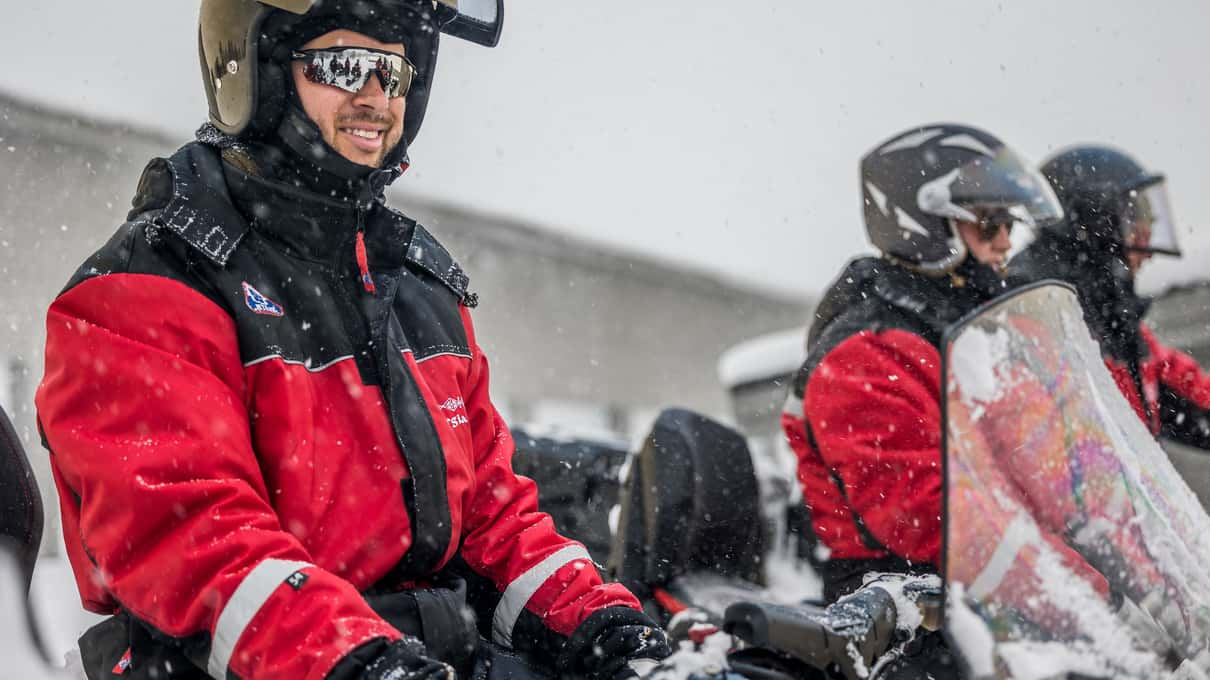
Hands and feet, then the face
Fingers suffer first, because your hands sit on the handlebar in the wind. Mittens keep fingers together and warmer than gloves, which is why Alta Adventure asks for them, and a thin liner glove underneath lets you take a photo without bare skin.
Feet need room. Wear one thick pair of wool socks in the lent boots, since a boot crammed tight with layers cuts blood flow and makes toes colder, not warmer.
Your face takes the wind. A neck tube pulled up over chin and nose helps a lot, and if you wear glasses, keep them on under the helmet rather than leaving them in a pocket.
A daylight ride with the warm kit included
Æventyr's daytime tour starts from a mountain lodge in Gargia Valley. Its kit is a thermal suit and helmet with shoes and gloves. It scores 4.9 from 70 reviews on GetYourGuide and 5.0 from 20 reviews on Viator.
Spotting frostbite early
Watch the cheeks and the nose, the parts of the face that take the most wind. Early frostbite shows as pale or waxy patches of skin that feel numb rather than painful.
Check your partner's face at every stop, and ask them to check yours. Cover any white patch you spot and warm it gently with a hand, then tell the guide. Rubbing it with snow is an old myth that does more harm than good.
Passengers get colder than drivers, because they sit still while the driver works the throttle. Our guide to driving alone or sharing a sled covers this trade-off between the two seats.
Phones and cameras in the cold
Batteries drain fast in deep cold. Keep your phone in an inner pocket close to your body, and take it out only for a photo at a stop, never while the sled is moving.
A spare power bank in the same warm pocket helps on the long tours. On an evening aurora ride, a phone that dies before the sky lights up is a common and avoidable disappointment, as our guide to aurora rides from Alta explains.
Leave what you do not need behind. Alta Adventure lets you store spare things at its office before the minibus leaves, and the less you carry under the suit, the more freely you can move.
Dressing for the month you travel
The coldest stretch usually comes during the dark weeks of mid-winter and just after them. By March and April the sun climbs higher and the days feel milder, though the plateau can still turn bitter on a clear night.
Our guide to picking the month for your ride compares the dark season with late winter. Whenever you go, pack the wool layers anyway, because the same kit works in every month the sleds run.
Children feel the cold faster than adults, and young passengers sit still for the whole ride. If you travel as a family, our guide to riding with children in Alta lists the age limits along with the extra care they need.